

Print functional parts with polypropylene 3D printer filament
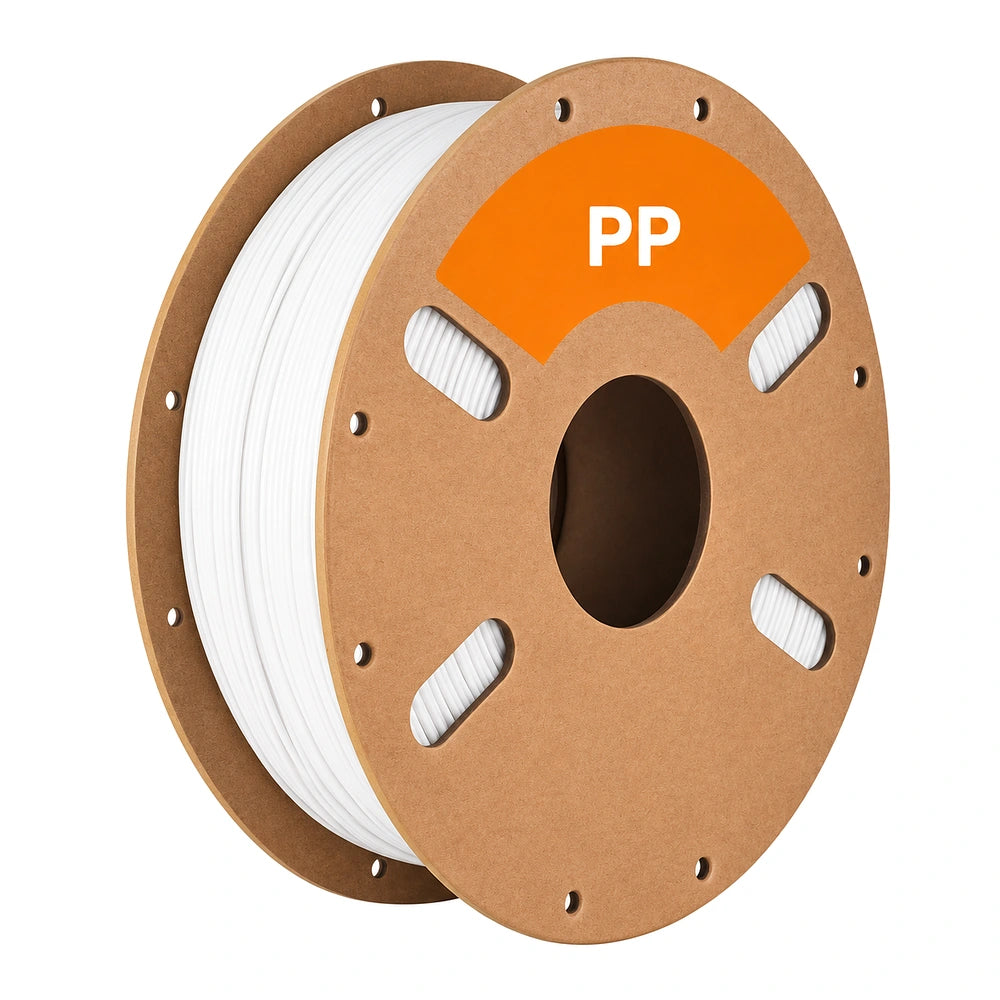
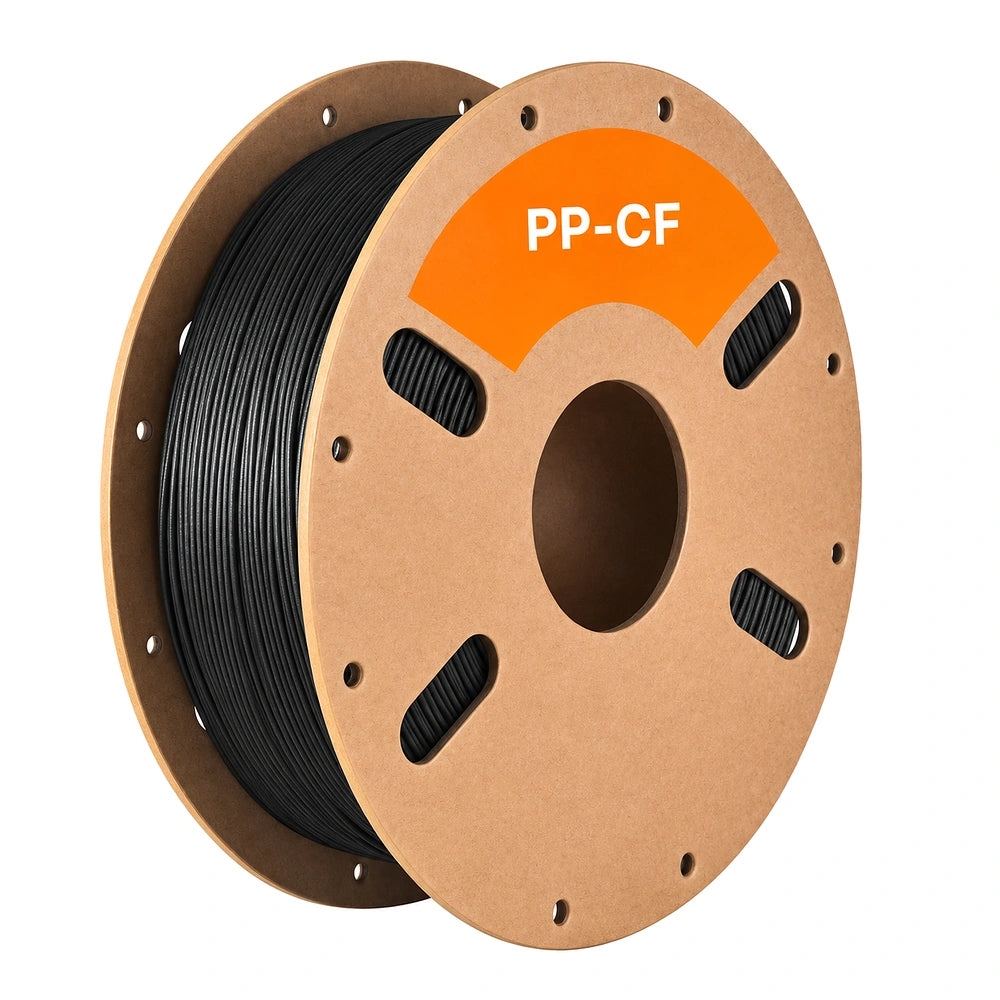
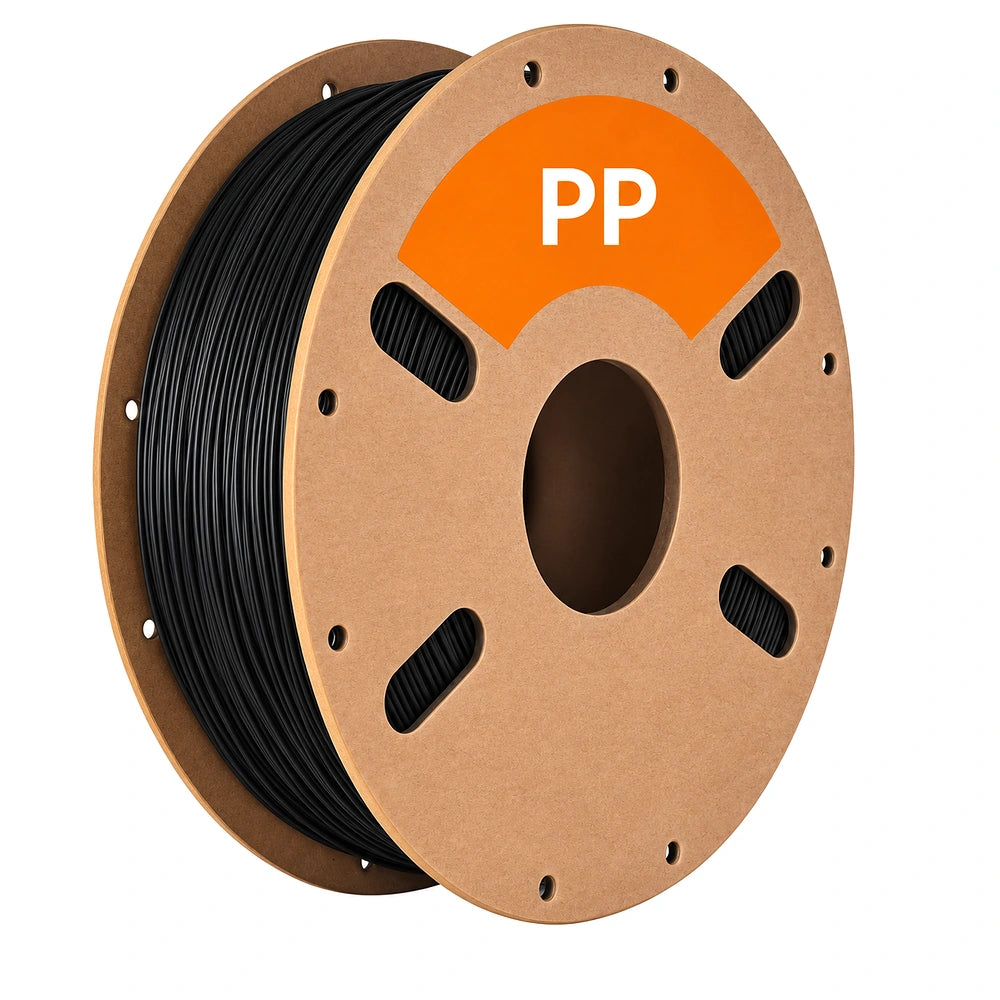
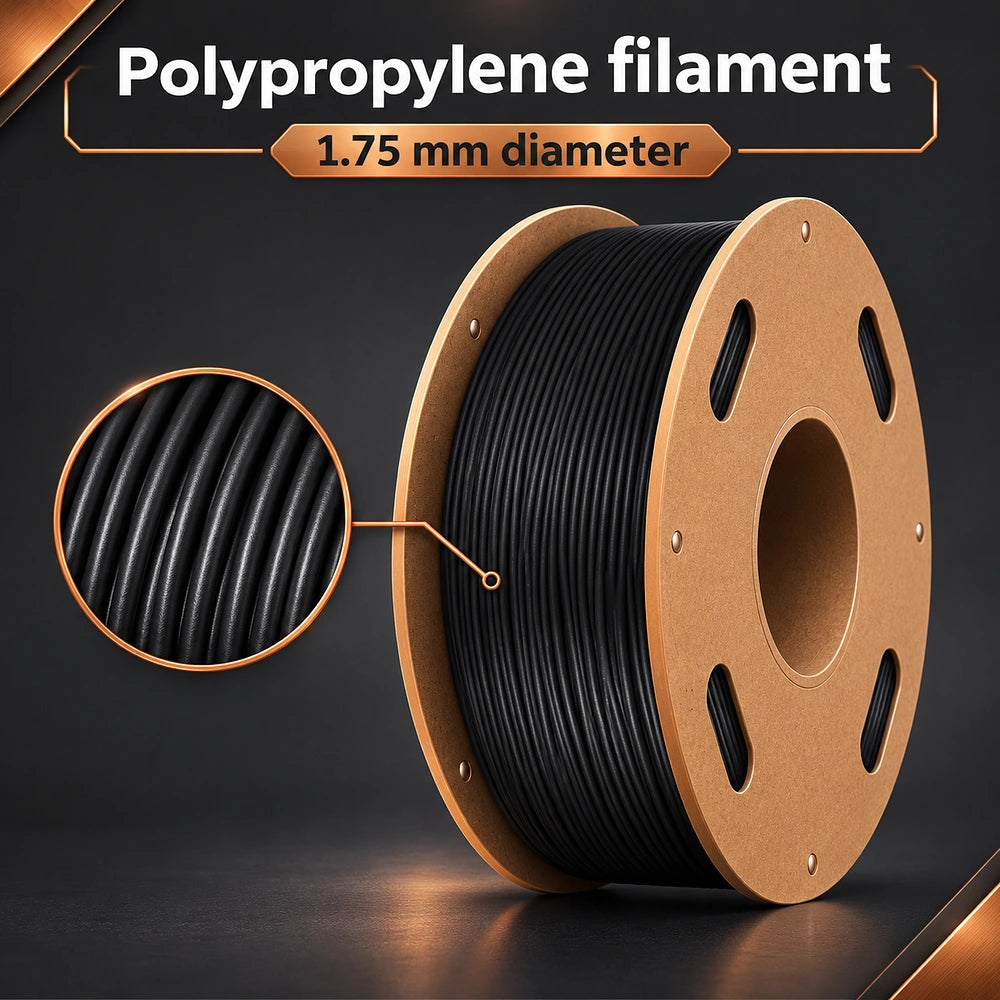
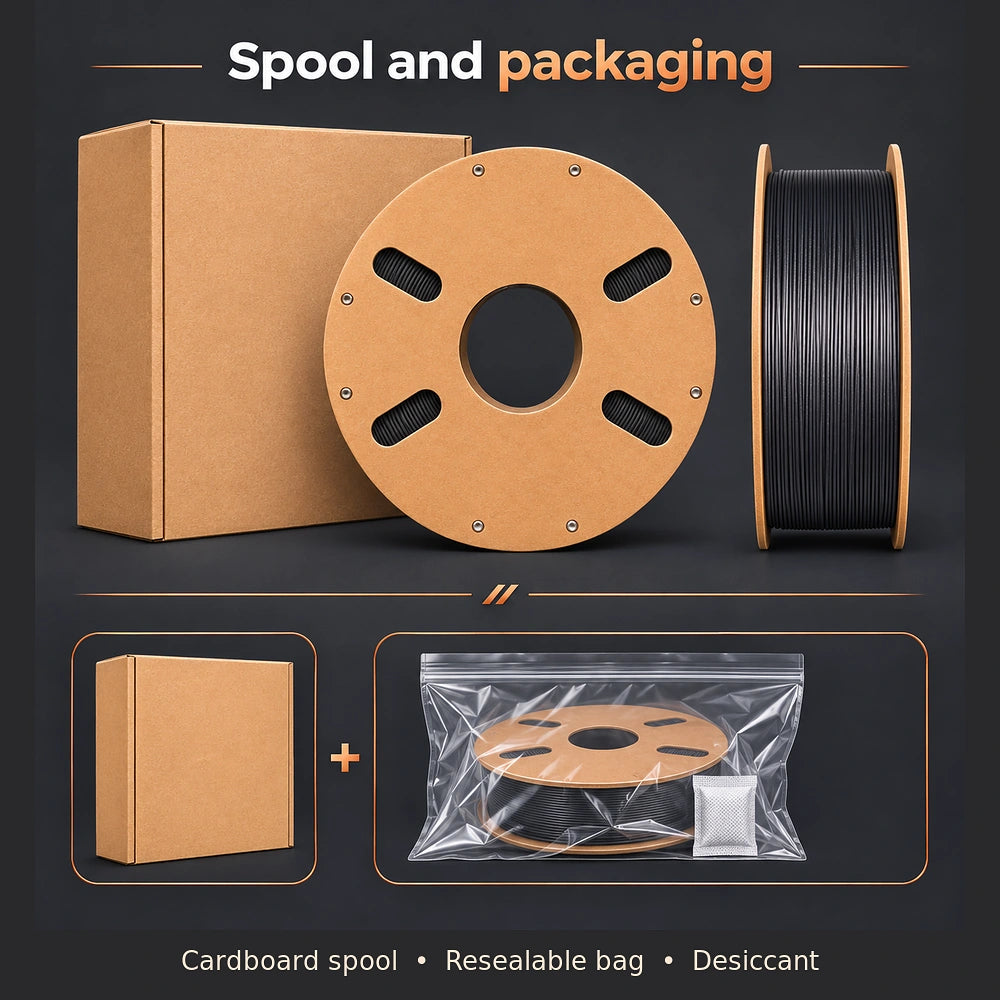
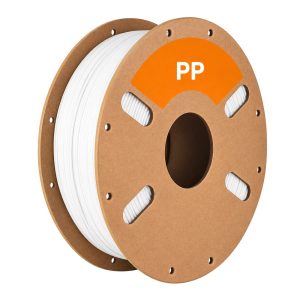
Use this 1.75 mm polypropylene 3D printer filament to make functional prototypes, small clips and fittings on a compatible FDM printer. Choose standard PP in black or white when you want to make parts that can flex in use, or choose black PP-CF when your design calls for carbon fibre reinforcement. Each standard PP spool has 900 g of filament, and the PP-CF spool has 700 g, so you can check the weight against your slicer’s estimate before starting a project.
Set up your FDM printer for PP filament
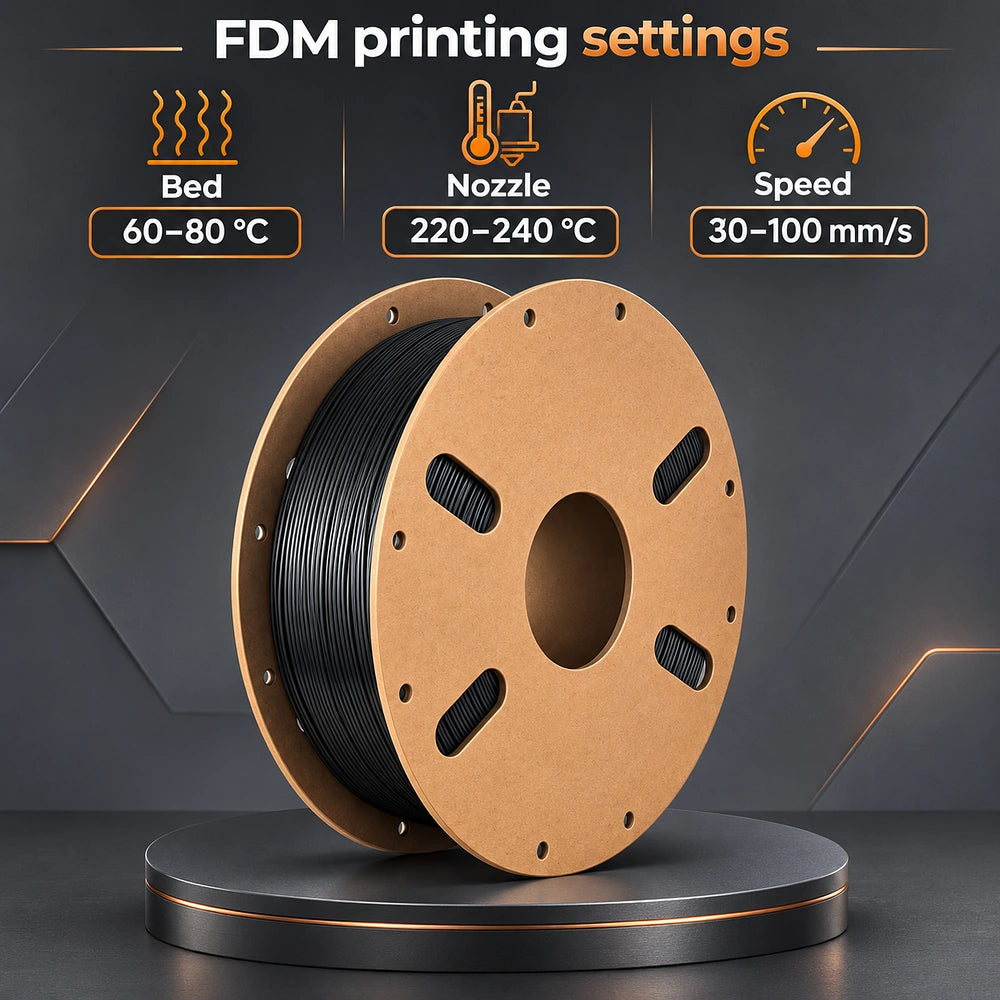
Before ordering, check that your printer can take 1.75 mm filament and reach the nozzle and heated bed temperatures below. Use a build surface suitable for polypropylene. If you’re trying the material for the first time, print a small sample with the same first-layer settings you plan to use on the full production part. That gives you a chance to check bed adhesion before committing to a longer job.
- 1.75 mm diameter for compatible FDM printers.
- 220–240 °C nozzle and 60–80 °C bed for your slicer.
- 30–100 mm/s to tune speed.
- 900 g PP or 700 g PP-CF to plan material use.
Frequently asked questions about Polypropylene 3D Printer Filament
What’s the difference between PP and PP-CF?
PP is standard polypropylene and PP-CF is polypropylene reinforced with carbon fibres. Choose black or white PP for a 900 g spool, or black PP-CF for a 700 g spool. Select the material and colour together when ordering.
What temperatures and speed should I use?
Set your nozzle within 220–240 °C, your heated bed within 60–80 °C and your print speed within 30–100 mm/s. Test a small part within those ranges before printing a larger piece, then adjust your profile for your machine and build surface.
Can I use PP-CF with my current nozzle?
Check that your nozzle is rated for carbon fibre-filled filament before using PP-CF. Carbon fibre-filled materials can wear ordinary nozzles, so look for a wear-resistant option approved for your printer. Also check that your printer takes 1.75 mm filament.
What should I check if the first layer lifts?
Check that you’re using a build surface intended for polypropylene and that the bed is within the 60–80 °C range. Try a small first-layer test and check the nozzle height before running the full job.
Discover our associated collections: 3d printer • 3d printer filament
Products to discover next: Pla 3d printer filament • Abs plastic 3d printer filament


Reviews
There are no reviews yet.